
Module 1, lesson 2
Build Your Brand and Portfolio
In order to be credible and attractive to clients, you must curate and gather your professional experiences that answers why they should hire/be interested in you. A portfolio concretizes these experiences into a fleshed out, summarized medium for them to see.
objectives
- Understand the basics of personal branding
- Learn how to effectively curate your works and experiences with a portfolio
- Learn your different tools and platforms for showcasing your brand and portfolio
Developing a Strong Personal Brand
The term “brand” has been used to identify a product or a company; you may see a certain color combination and identify that it’s from your favorite fast food, clothing brand, or artist. It is behind the most successful company’s identities, and it has become a strong tool in defining individual careers as well.
You may already have identified yours as a creative—maybe it’s a style or a persona that you’re most passionate about. Below are our recommendations for concretizing your brand, supplemented by creative media professionals of different backgrounds. It is also integrated with Simon Sinek’s framework as well as Harvard Business School’s steps on building a personal brand.
Simon Sinek’s Circle on Why, What, and How Branding
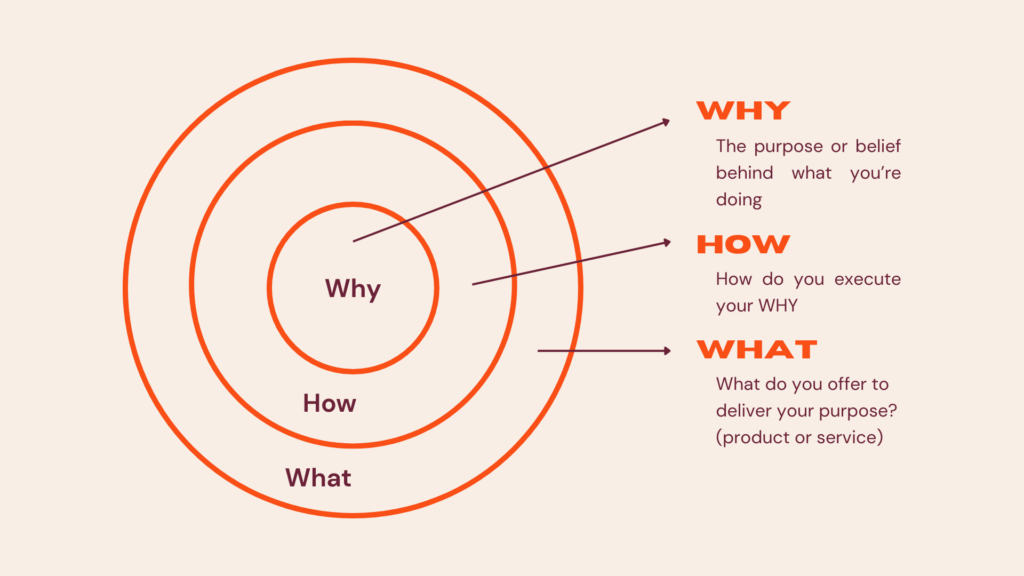
1. Define your purpose (core identity)
Start by asking yourself the right questions:
- What are my values?
- What are my strengths?
- What purpose do I want to deliver?
These answers may come from an accumulation of takeaways from several career experiences. “Niching down” may emerge through the process of trial and elimination; by trying different roles, projects, or creative directions, you can deduce which ones truly align with your purpose.
2. Identify your target audience
- Who do you want to reach?
- What do they value and how can your strengths accommodate these?
3. Construct your narrative (visual identity)
It’s time to translate these insights into a cohesive story and look. A consistent message and aesthetics is crucial. A personal visual identity may include but are not limited to the following:
- Personal Logo
- Narrative (such as artist profile or short bio)
- Typography
- Color Palette
- Imagery and Composition
- Visual Editing Style
3. Communicate your purpose
From the visual identity that you are able to construct, you can now promote your value as a creative through application in different available channels. “Consistently put your work out there”. After all, you can’t showcase your value if not for effective communication. This step will be further discussed in the latter part of the module under the topic, “Platforms for a Portfolio”.
4. Adapting your brand
Ensure that your brand (and how you execute it) are adaptable to modernization and changes in the industry. Sofia Paderes, currently a graphic designer for the Fat Kid Inside Studios, notes that her colorful, heavily textured, and storybook-like style has not changed. However, she had to digitize this style eventually with newer tools and softwares.
Consistently reevaluating your brand will ensure that your why, how, and what are actually delivered effectively to your intended audience.
Creating your portfolio
It is also a smart move to create and build a portfolio according to which occupation/opportunity you want to join.
A portfolio is what the employer/industry initially expects from you (Let the work speak for itself). It is one of the applications that best embodies your brand through a display of your outputs and experiences. It bridges your “what” to your “what” (your outputs).
Seeking inspiration from other portfolios
Whether you are aiming for photography, web design, or filmography, the best inspiration are the tip of your fingers. Behance or Dribbble are among many sites that showcase outstanding portfolios. Take note of the visual styles, format, context, and execution that you might want to apply to yours.
Showcasing your best works
Gather as many relevant materials as you can, and then eliminate what does not fit your theme and purpose. If you want to brand yourself as a sports or fashion photographer, remove those miscellaneous shoots or illustrations.
If you don’t have most of the works for your intended portfolio, you can start with applying this rebrand onto projects you create moving forward. For those in visual production-based fields such as photography, film, or design, even test shoots, collaborations, and personal projects can serve as valuable material.
Deciding on a format
Which medium do you use? Print or digital? In many cases today, most employers prefer having a digital copy best fit for electronic communication. However, depending on your intent and job nature as a creative, you might want to have print formats.
Here is a guide from blurb blog on the pros and cons of a digital and physical format.
Organizing your content
Many managers and clients spend only around three minutes looking at a portfolio. It’s all about how you structure it, and how the user is able to navigate through it. It’s best that your works have segments/categories. Non designers can look through many templates available online. Ensure that there’s a visual hierarchy with the following elements: titles, headers, subheaders, body copy, and images or video.
Adding your branding and context
Apply the style, aesthetic, and narrative elements that you were able to establish in your brand building.
Platforms for your brand and portfolio
Your personal brand can now be communicated out there, and it’s important to do it strategically with the tools you have, especially in the digital landscape. In marketing, this strategy is explained through paid, owned, and earned media. This framework would allow your brand and portfolio to reach your audience.
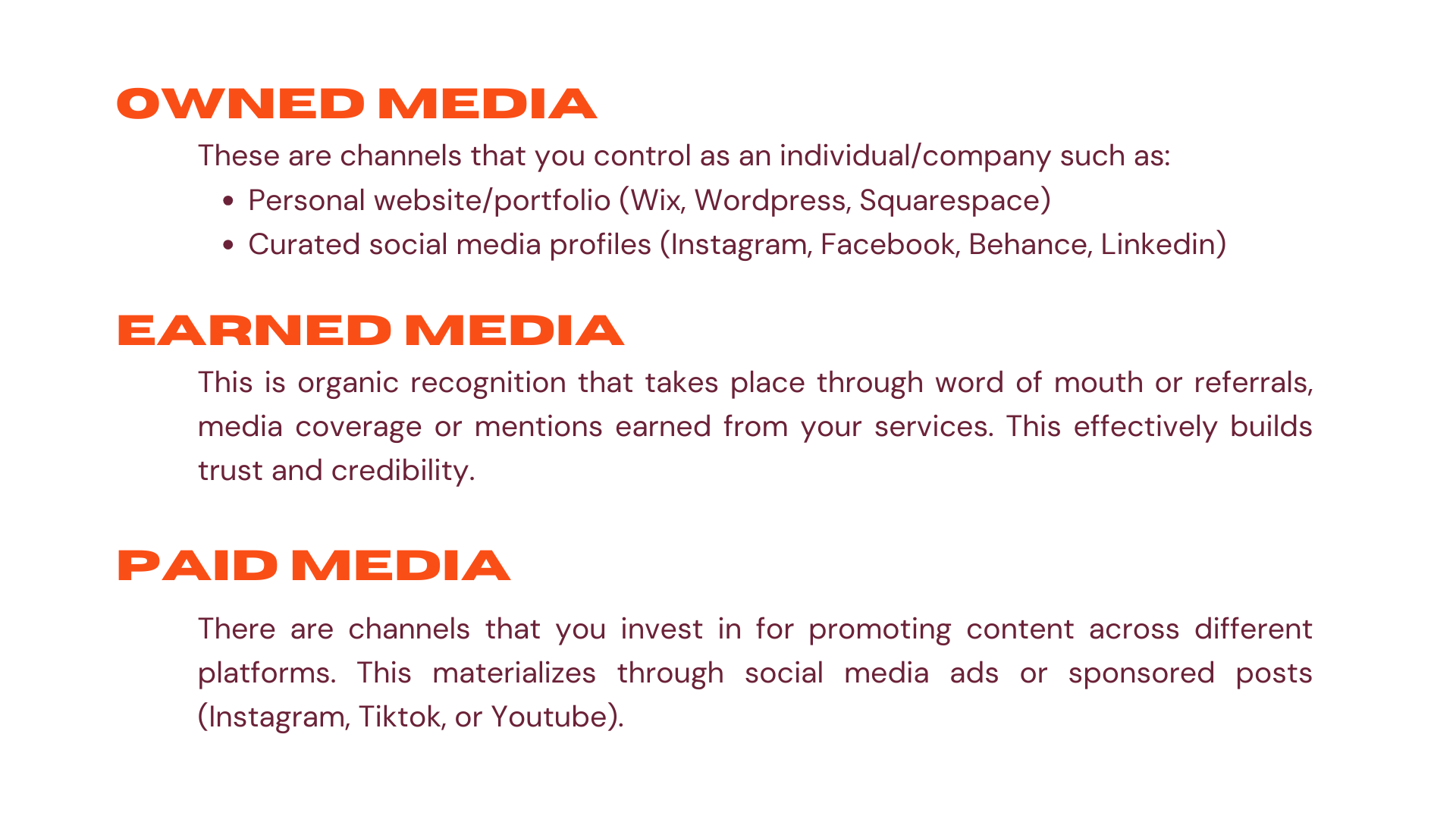
In making use of these three strategies, ensure that you consider the following: control, cost, and impact.
Activities
Activity 1: Brand and Curation Exercise
In application of your learnings in this module, here is an exercise for curating works that fit best for your portfolio. The questions provided may help you understand which outputs you might want to eliminate/keep according to your objective.