Module 1, lesson 3
Your Next Move: Finding and Applying to the Right Opportunities
In the previous lessons, you’ve done the internal work, and you’ve gained a foundation in building your personal brand. Now, it’s time to put those insights into practice. Whether you’re applying for an internship, a side hustle, or your first official job, this lesson will guide you in navigating your next move in your professional career.
objectives
- Learn how to spot opportunities that align to personal values and goals
- Craft and optimize your application requirements
- Develop a personal strategy for applying to possible work or internship opportunities
Finding the Right Opportunities
Self-Assessment
Before pursuing any opportunity, there are two things you should consider:
- You should know what you’re looking for.
- You should know where to find it.
Seeking opportunities, especially when you’re building your career, is not just about browsing through job listings; it’s also about understanding yourself. Getting clear on what you’re looking for and what aligns with your values is important because finding (and landing) the right opportunities starts with knowing yourself well.
Here are a few questions you can ask yourself as you start your search to reflect on what kind of work excites you and see yourself doing:
- What skills do I enjoy using?
- What kind of environment do I thrive in and want to be a part of? Creative, structured, fast-paced?
- What industries or causes do I care about?
Understanding details like these helps you narrow your search and focus on finding and applying to roles that align with both your abilities and passions.
At this stage, it’s also helpful to clarify your values and set goals. What are you motivated by? Do you see yourself working in corporate, a startup, or freelancing? Knowing what drives you can help in making intentional choices instead of just applying to every position you see.
“We also need to think about short-term success for the long-term purpose because that’s different. Like for example, I know I have a long-term purpose, like this is my purpose in life. But they’re also short-term goals that you have in life, or short-term versions of success.” – Julia
Understanding details like these helps you narrow your search and focus on finding and applying to roles that align with both your abilities and passions.
Research
Once you’ve taken the time to pause and understand yourself more, the next step is to research and explore what’s out there. Your dream company, job, or role is out there, but sometimes it’s about knowing where (and how) to look. Here are a few ways you can strategically explore:
- Check Out Different Job Platforms:
You can start your initial search by visiting trusted platforms. Here, opportunities and application processes are more accessible to you as an applicant. Explore portals such as Prosple, Kalibrr, and Indeed for local opportunities, and utilize LinkedIn for job applications through specific keywords and filters. Checking company websites directly, too, as many companies also post openings on their own platforms before posting elsewhere.
- Reach Out to Your Network:
Your connections can be one of your greatest resources. And it isn’t just about the people you know, it’s also about the quality and building genuine relationships that can lead to new opportunities. You can start small by reaching out to professors, mentors, or friends who are already in the field you’re interested in. Participating in webinars, workshops, and even alumni events is also a great way to widen your network. And don’t hesitate to let people know you’re exploring opportunities; sometimes, jobs are not publicly posted but are shared within professional networks.
- Utilize Social Media:
Social media is a powerful tool, and platforms such as Facebook, Instagram, and TikTok can also be places where you can find opportunities. Follow and engage with companies and industries you have an interest in, as many have begun posting opportunities directly on their own platforms.
- Create Your Own Opening:
Don’t be afraid to ask and seek out opportunities for yourself. Not all opportunities are posted online, and some of the best ones come from being proactive and having the courage to ask. You can reach out directly to a company or individual you admire with a cold email, or explore freelance or volunteer projects to build experience and expand your network. Joining online communities or groups can also lead to possible opportunities. Remember, sometimes you don’t wait for an opportunity; you create it.
Tip: Create a spreadsheet or database where you list opportunities, application deadlines, and contacts. This can help you stay organized and focused throughout your job search.
Application Essentials
Once you’ve found roles and opportunities that align with your goals and values, it’s time to gear up for that application. But it’s important to remember, it’s more than just submitting requirements; it’s about showing recruiters why you stand out!
Your Application Toolkit
Here is a list of the usual requirements of any job or internship opportunity. These are your tools in making a strong first impression and conveying a story– your story.
- Resume
Your resume should be a concise, one-page summary of your qualifications, experiences, and skills, tailored to the roles you’re applying for. It must also be clear and easy to read, emphasizing achievements rather than just stating tasks. You demonstrate impact through the use of strong action verbs such as “led,” “organized,” “created,” and “designed.”
- CV (Curriculum Vitae)
Compared to a resume, a CV is a more detailed, multi-page document. It provides a comprehensive overview of your academic and professional background, typically used for academic or research-oriented roles.
When creating your CV and tailoring it for a particular role, here are some things you should include:
- Contact Information: Full name, email, phone number, and links to your LinkedIn and portfolio.
- Education: Degree, school, graduation year. Including your class standing and grades is also optional.
- Experience: Internships, part-time work, volunteer work, or leadership roles.
- Skills: Hard and soft skills
- Achievements: Awards, certifications, or recognitions that showcase your strengths and commitment to excellence.
- Professional Summary (Optional): A short statement about who you are and what you’re looking for.
- References (Optional)
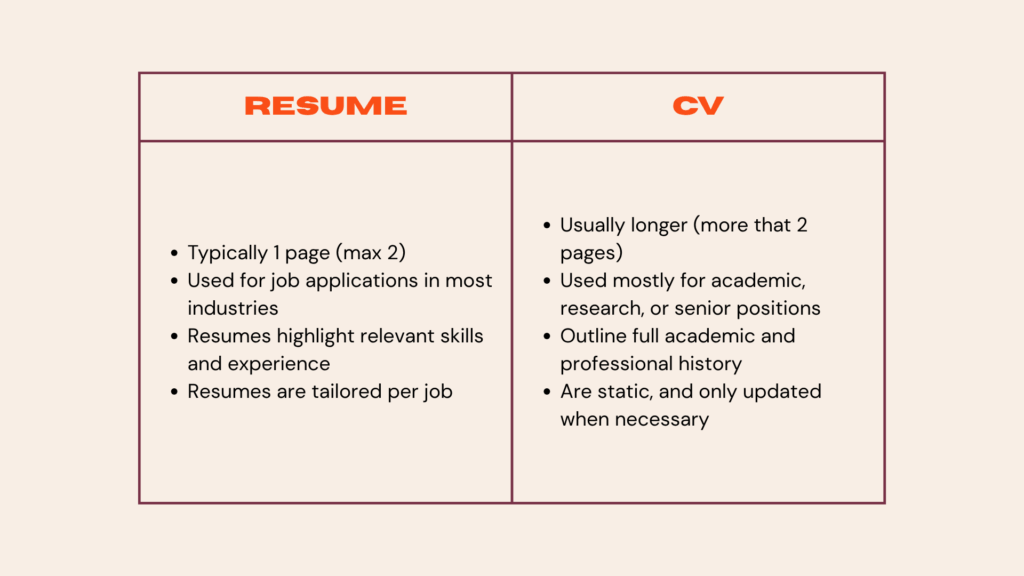
Remember, when preparing your resume, keep your format clean and consistent. Make sure it’s easy to read and process since most recruiters go through multiple applications, and spend only a few seconds scanning documents.
- Portfolio
Your portfolio is proof of your skills and previous work. For creative or media-inclined fields, a portfolio is just as important as a resume. Here, it’s great to include samples of your best work, case studies, or projects that show your specialities, growth, and range. Utilize online platforms like Behance, Notion, or a personal website to organize your work professionally.
- Cover Letter
While it’s not always required, take the time to write a cover letter. This is your chance to add context and personality to your application and all other documents attached to it! When preparing your letter, here are some things you could include:
- State your purpose – Why are you applying for that position in that particular company?
- Demonstrate your fit – What makes you a standout candidate for the role?
- Close with enthusiasm – Show genuine interest in and excitement for the opportunity.
Not all postings warrant a cover letter, but submitting one can help set you apart from your peers.
Tip: Make an effort to keep all four updated. You’ll never know when an opportunity might come up.
Applying for the Role
Now that you’ve built your application toolkit, it’s time to put everything together and start sending those applications!
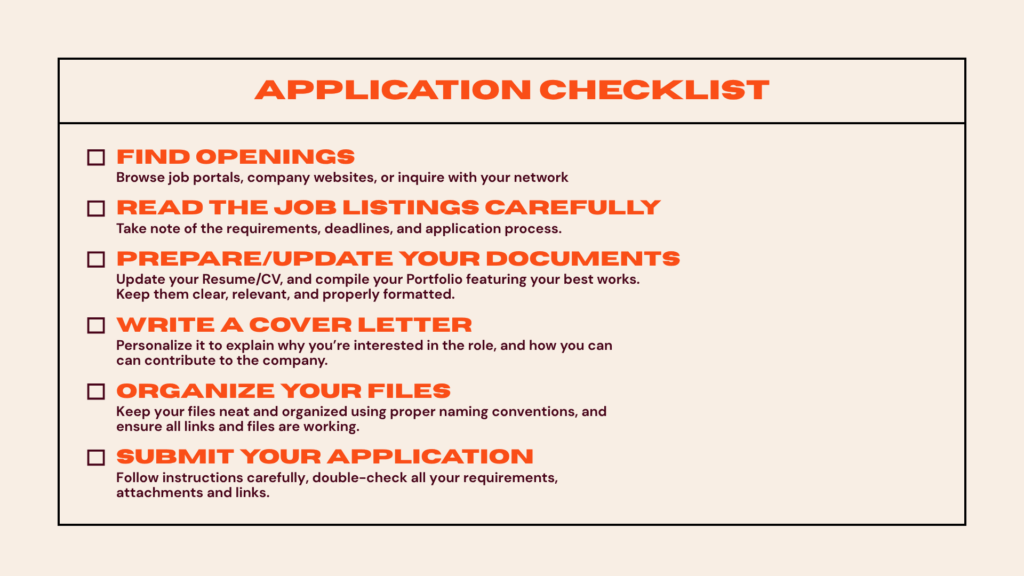
But, before applying, don’t forget to read the job description carefully. Take note of the key responsibilities, qualifications, and deadlines, and think about how you can communicate that clearly in your application. Alongside this is ensuring that you tailor your documents to each role you’re eyeing. Customize your resume, cover letter, and email introduction for each job. Remember: generic applications get lost in the shuffle. Highlight your experiences that connect to the role, and show genuine interest in not just the position, but the organization as a whole.
When sending out applications, one of the most crucial, yet overlooked, steps is following the application instructions as stated. There are instances where employers request specific details or requirements from their applicants–such as files needing to be in PDF format, or submitting portfolios via a link. Remember, attention to detail can make all the difference. Always read and follow the application instructions carefully; doing this demonstrates your attention to detail and ability to follow directions. Before clicking on the “send” button, double-check everything, ensuring that your documents are accurate, complete, and labeled properly.
Here’s a checklist that you can use to keep track of your application process!
Follow Up Professionally
You’ve worked on the documents, you’ve written the letters and emails, and you’ve sent your application. And now, the waiting game begins. At this point of your application journey, patience is key–but so is initiative. If you haven’t received an acknowledgement email shortly after you’ve applied or done your interview, it’s okay to send a polite follow-up email. Remember to keep it short and respectful. Thank them for considering your application, express your continued interest in the position, and ask if there are any updates on application status. Crafting a well-written and well-timed follow-up reinforces your enthusiasm, professionalism, and communication skills–all of which are qualities employers look for.
Making Your Mark
“Your school, your pedigree, your connections might open door for you initially, but it won’t keep the door open. At the end of the day, it’s still about you. It’s about your credibility. It’s about your hard work. It’s about what you have to share.” – Gepay Bautista
Landing a job isn’t just about applying and accepting; it’s also about positioning yourself for future opportunities. This is where personal branding comes in.
From an HR standpoint, recruiters often look at three key factors: fit, potential, and attitude. Employers don’t just want candidates who meet the role; they’re also looking for individuals who they think fit and will thrive in the company’s culture and values. If your application is your first impression, and your interview seals the deal. Once you’ve moved from the application stage to the interviewing stage, HR professionals aren’t just there to walk through your documents; they’re there to gain context.
Here’s a snippet of the CIP team’s conversation with an HR consultant to gain some insight into the recruitment process:
Gepay Bautista (HR Consultant)
Gepay Bautista is an HR Consultant for a tech company. With decades of experience in working within the realm of HR–now commonly referred to as talent acquisition–to heading almost 5,000 volunteers for her church ministry, working with people of all walks of life is her norm. From an HR standpoint, she has shared that it is a two-way street. On one end, they often look for candidates who are genuinely interested in the industry or in the business that they are in. And the other is also knowing if the company can provide valuable learning opportunities for the applicant. She also shares that while resumes and portfolios give HR a general background of the applicant, she has emphasized that interviews are where they validate certain information, especially if they notice a few red flags, such as many work gaps or existing legal issues.
Remember, taking the next step in your professional journey is both about strategy and self-discovery. You’re not just checking the boxes; you’re also learning how to tie your strengths, passions, and purpose with opportunities that fit. Every application, interview, and rejection is part of that journey and helps in building your story.
Activities
Activity 1: Manifest! Write About Your Dream Career
Before chasing opportunities and applying for them, it’s good to take a step back, reflect, and visualize your dream career–not just in title, but even lifestyle and purpose. This activity will help you dig deeper and allow yourself to get excited about all the possibilities that lie ahead of you!
Instructions:
Find a nice and cozy spot, and spend 10-15 minutes (or however long you need) writing in your physical or digital journal to reflect on your dream career. Don’t worry about having the perfect wording or idea, just let your thoughts flow!
If you need a little help, here are a few helpful prompts to get your creative juices flowing!
- What does my dream career look like? What kind of work am I doing, where am I doing it, and who am I working with?
- What do I want to be known for in terms of my work? My skills, my character, my influence?
- What is my ideal workday? (Better if you can describe and outline in detail!)
- Whose work inspires me, and what draws me to them?
- How does my dream career influence the life I want to build for myself?
Activity 2: Career Hunt
You’ve visualized your dream career, now it’s time to see how it connects to the real world! In this activity, it’s all about taking action–searching up on opportunities, industries, and roles that align with you and your personal goals.