Module 1, lesson 1
Discover Your Skills & Strengths
At the earliest stages of our careers, it’s important to reflect on all of our experiences, skills, and interests, because these are what shape us as young practitioners. This lesson will focus on identifying personal skills and strengths and using them to develop career paths.
objectives
- Identify personal skills and strengths
- Learn how these skills correlate to potential career opportunities
- Recognize areas and opportunities for growth and development
Hard Skills vs. Soft Skills
“Companies look for teachable hearts and good character, because those cannot be taught, not in schools.” – Noel Galvez
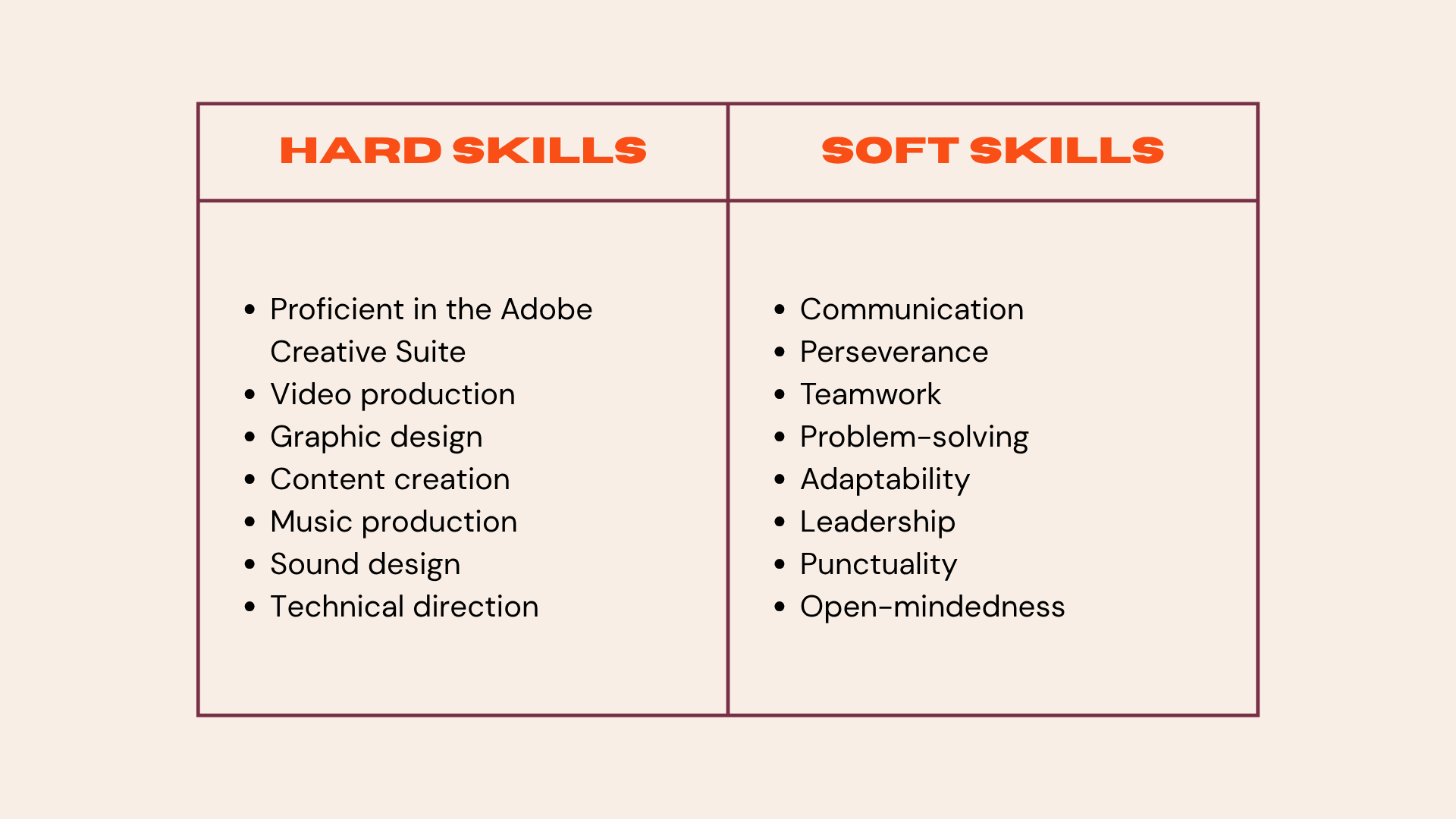
A person can have two types of skills: hard skills and soft skills. Hard skills are specific, teachable abilities that can be objectively measured, like directing and producing. These are usually skills that are learned through formal education or training, certifications, or experience. Soft skills, on the other hand, are personal attributes and traits that are transferable and relate to how you work with others, such as teamwork and resourcefulness.
To identify your hard skills, you must objectively reflect on your skill level in your desired career path. Think about your capabilities from the eyes of a job employer, who has years worth of experience over you. If you want to become a filmmaker, how proficient are you in scriptwriting? Operating a camera? Color grading? Are your skill levels in these areas enough to impress a seasoned professional? And if you’re not skilled enough, what are you doing to upskill yourself?
As for your soft skills, it’s best to take personality tests such as the MBTI Personality Test and the DISC Assessment, which help in identifying your leadership styles and your workplace values. These tests also help in finding areas for improvement in your work ethic, which we will discuss later on in this lesson.
Once you’re able to understand your hard and soft skills, you must then know how to use them to your advantage.
Finding Balance in your Career
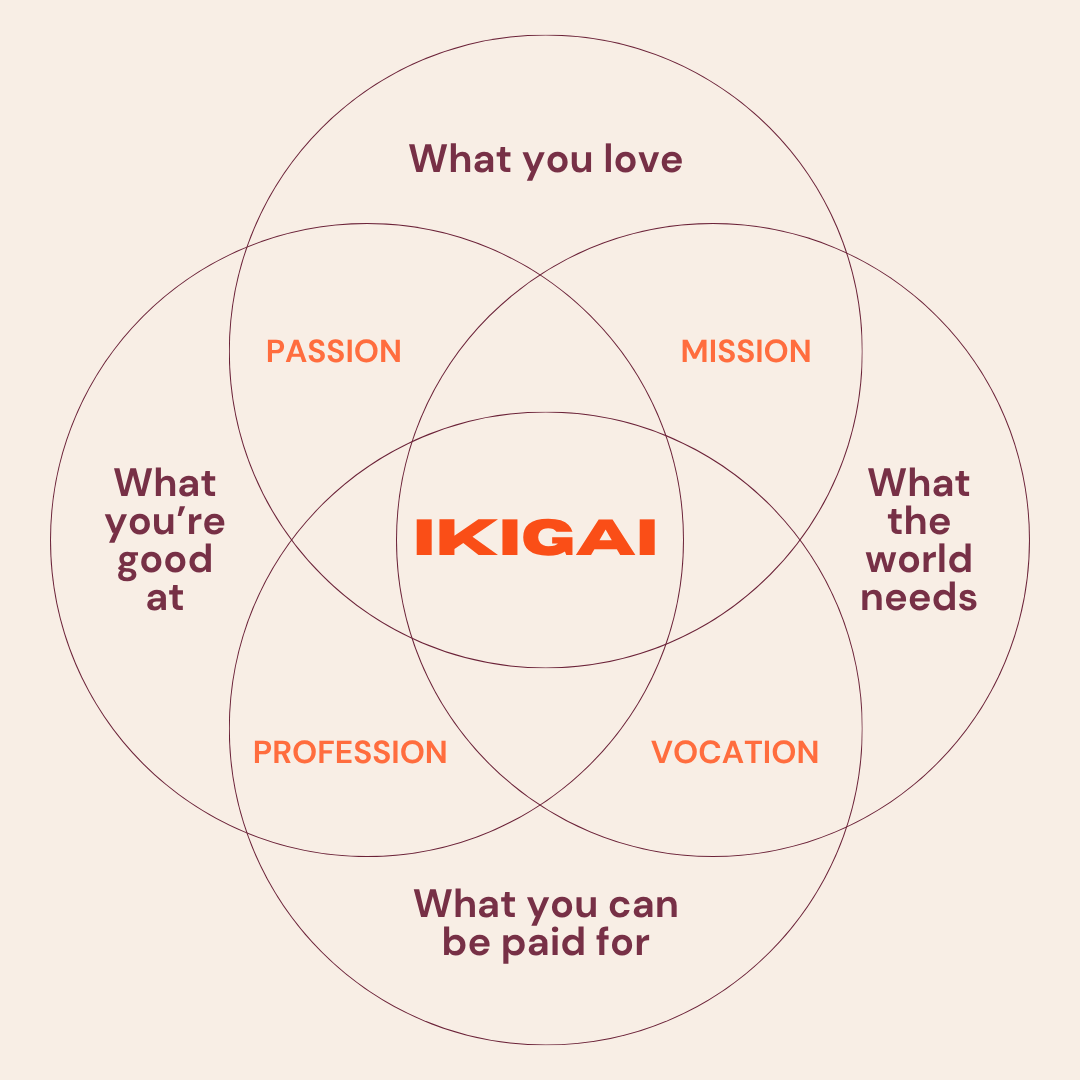
Ikigai is a Japanese concept that refers to that which brings joy and value to one’s life. It is the intersection of four self-reflection prompts: what you love, what you are good at, what the world needs, and what you can be paid for. Finding the right balance among these four can be highly beneficial during your early career development because it can direct you towards purpose, happiness, and fulfillment all at once. Your ikigai will serve not only as a foundation for your future plans, but also as an anchor for your self-identity. Later in this lesson, we will look into more detailed prompts that will direct us towards finding our ikigai.
Transforming your WEaknesses
A part of being strong is also being able to admit your weaknesses. In building your personal brand and getting to know yourself, you must know what you struggle with and actively; work towards improving it.
The first step is to identify your weaknesses through self-assessment. Our activity later will focus on utilizing the SWOT Analysis method to determine your strengths, weaknesses, opportunities, and threats. For further insights, you can also seek feedback from your peers, mentors, and trusted individuals of your community. Ask for their honesty, but be prepared to receive constructive criticism. Remember, you must be able to face your weaknesses. If there are also tangible metrics to assess yourself, such as quiz results or task completion rates, consider reviewing those as well.
Then, with your listed points of improvement, strategize how you will address them. Whether it be through practice, enrolling in courses, or searching for mentorship opportunities, it’s good to do what works best for you. You can also set goals following the SMART framework, making sure they are specific, measurable, attainable, realistic, and timely.
Do not be discouraged if you take time to improve yourself. Remember, we are all Creatives In Progress.
“If you don’t spend time really refining your skills, and you don’t invest in what you need to learn to better yourself as a creative, what are you going to do? Where are you going to go?” – Junessa Rendon
Activities
Activity 1: Self-Reflection Prompts to Find your Ikigai
While your ikigai is grounded in four main self-reflection questions, this activity will push you to dig deeper through more detailed prompts. For this activity, find a quiet place to reflect and answer the worksheet found below.
Activity 2: Your SWOT Analysis
Another helpful resource is the SWOT Analysis tool, that will help you examine both internal and external factors that influence your career decisions. For this activity, keep an objective eye as you answer the worksheet found below.