
Module 4, Lesson 3
From Brief to Delivery: Navigating Client Work with Confidence
objectives
- Understand the basic steps of project management for freelancers
- Learn how to communicate and work effectively with clients
- Develop a personal system in handling projects, revisions, deadlines, and payments
Freelance Workflow
Getting that first inquiry or pitch from a potential client or collaborator is always exciting, especially when you’re just starting out. But before diving straight into all the fun stuff, it’s crucial to develop a clear process. Having a good workflow helps you stay organized, work efficiently, set boundaries, and make a strong impression. Let’s dive in, and learn how to move an inquiry to carrying out the project with confidence.
The Initial Inquiry
Every project and collaboration starts with an inquiry, it could be an email, message, or social media DM from someone interested in working with you. At this stage, everything boils down to communication and how you’re able to articulate your thoughts. Your goal is to clearly understand your potential client’s needs and determine if the project is a good fit for you.
Here’s a checklist of what you should do at the inquiry stage:
- Respond promptly and politely.
- Ask for the details: What is the project about? What is the estimated timeline? How much is the project’s budget?
- Keep the conversation friendly and still professional.
Tip: Treat every inquiry as a potential partnership, not just a transaction by showing genuine interest in the client and their vision.
First impressions are crucial, even during the inquiry stage. By demonstrating professionalism, politeness, and capability, you can help position yourself as someone the client can trust not just with their vision, but also their time, energy, and finances.
At this stage, consider asking the client if they have a project brief, mood board, or any relevant files that can help you, as the creative, better visualize and understand the overall project.
The Proposal
Once you know what your client needs and you’ve gathered the necessary information from the inquiry, it’s now time to draft a proposal or quotation. In this document, you should outline your understanding of the project, your approach, timeline, pricing, and payment conditions. A well-structured proposal not only clarifies expectations but also serves as a foundation for your contract. A clear proposal helps avoid confusion later and shows you have a good grasp of both the creative and business sides of freelancing. This also gives the client confidence that you’re organized and serious about your work.
Some things your proposal should include are:
- The scope of work (What you’ll deliver)
- Your timeline or estimated completion dates
- Rates and Payment Terms
- Revisions (How many revisions are included)
For learning how to price yourself as a creative, you can check out Lesson 2: Price Your Services to get insight and concepts on how to calculate your rate as a freelancer.
If the client agrees, congratulations! Now, you can move to a formal agreement; this is where your contract and timeline come in.
A clear workflow usually looks like this:
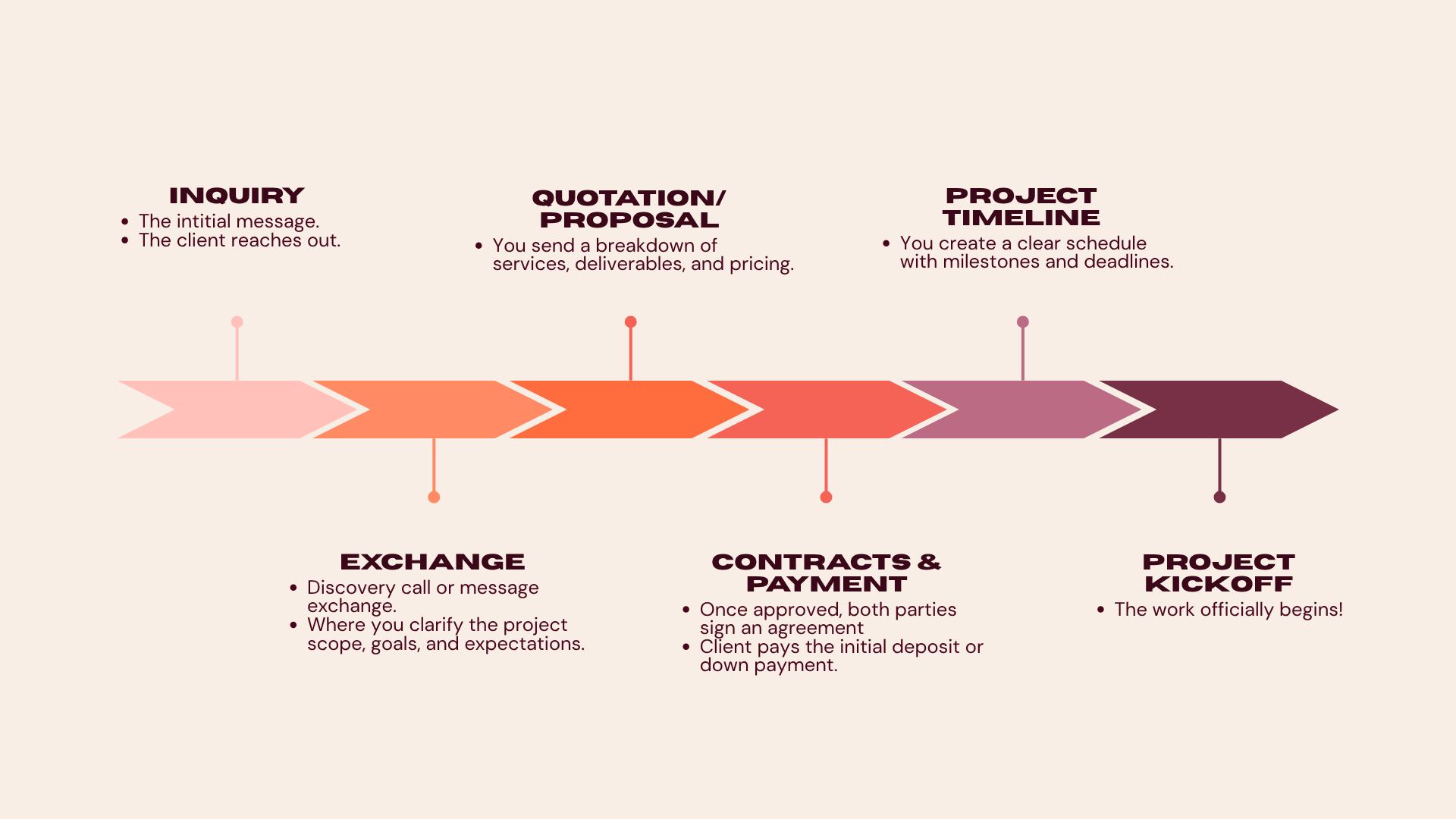
A smooth workflow doesn’t just make you look professional — it also saves time, avoids miscommunication, and builds client trust.
Contracts & Timelines: Your Protection and Guide When Working
Contracts
After your proposal is approved and both parties are aligned in terms of the overall vision and deliverables, your next step is to formalize the agreement with a contract and establish a timeline. As a freelancer, having a contract is your safety net. It outlines expectations, protects your work and your rights, and gives you and your client a sense of security.
Even if it’s a short, one-page agreement, it can go a long way. When drafting your contract, consider including these key details:
- Scope of Work: What tasks you’re responsible for.
- Deliverables and Timeline: When and what you’ll submit.
- Payment Terms: How much, when, and how payments will be made.
- Revisions: How many rounds are included and what counts as an extra fee.
- Ownership & Usage Rights: Who owns the final output and how it can be used.
- Termination Clause: What happens if the project stops midway.
Pro Tip: Always ask for at least a 30–50% down payment before starting work.This shows that you value your time, and ensures both you and your client are committed to the project.
Before starting the project, make an effort to finalize an agreement, even if it’s through email or a digitally signed PDF, always have something in writing. This process can help promote transparency and ensures you are compensated fairly.
If you’re just starting out, you can utilize contract templates from the internet as a guide. Don’t forget to personalize them, and tailor them to what best fits your situation.
Timelines
If contracts are your source of protection when working, having a mutually-agreed-upon timeline keeps everyone aligned on when each stage of work will be completed. The key to enjoying and making the most out of the project is to create a timeline that’s doable for you and understood by your client.
Here are a few things you can consider when working on your project timeline:
- Break the project into phases or milestones: For example, concept development → first draft → feedback → revisions → final delivery.
- Create deadlines for each phase/milestone: Be honest with yourself, and your client, on how long each stage will take, espcially if you’re freelancing on top of other things.
- Take into consideration buffer time: Things can always change. Add a few extra days to your timeline to accommodate these.
- Communicate clearly and professionally: Share the timeline with your client, and always be in communication with them. Let clients know where the project stands — even a quick update builds trust.
Client Communication Do’s and Don’ts
Now that your project is underway, there is a crucial factor that keeps everything running smoothly: good and clear communication. Good communication can make or break your freelance experience and your reputation to your client. How you interact and communicate with clients reflects your professionalism, reliability, and character— even if you’re just starting out. The goal is to end the project being someone the client would like to work with or refer to others in the future.
Here are a few things you can keep in mind when if comes to client communication.
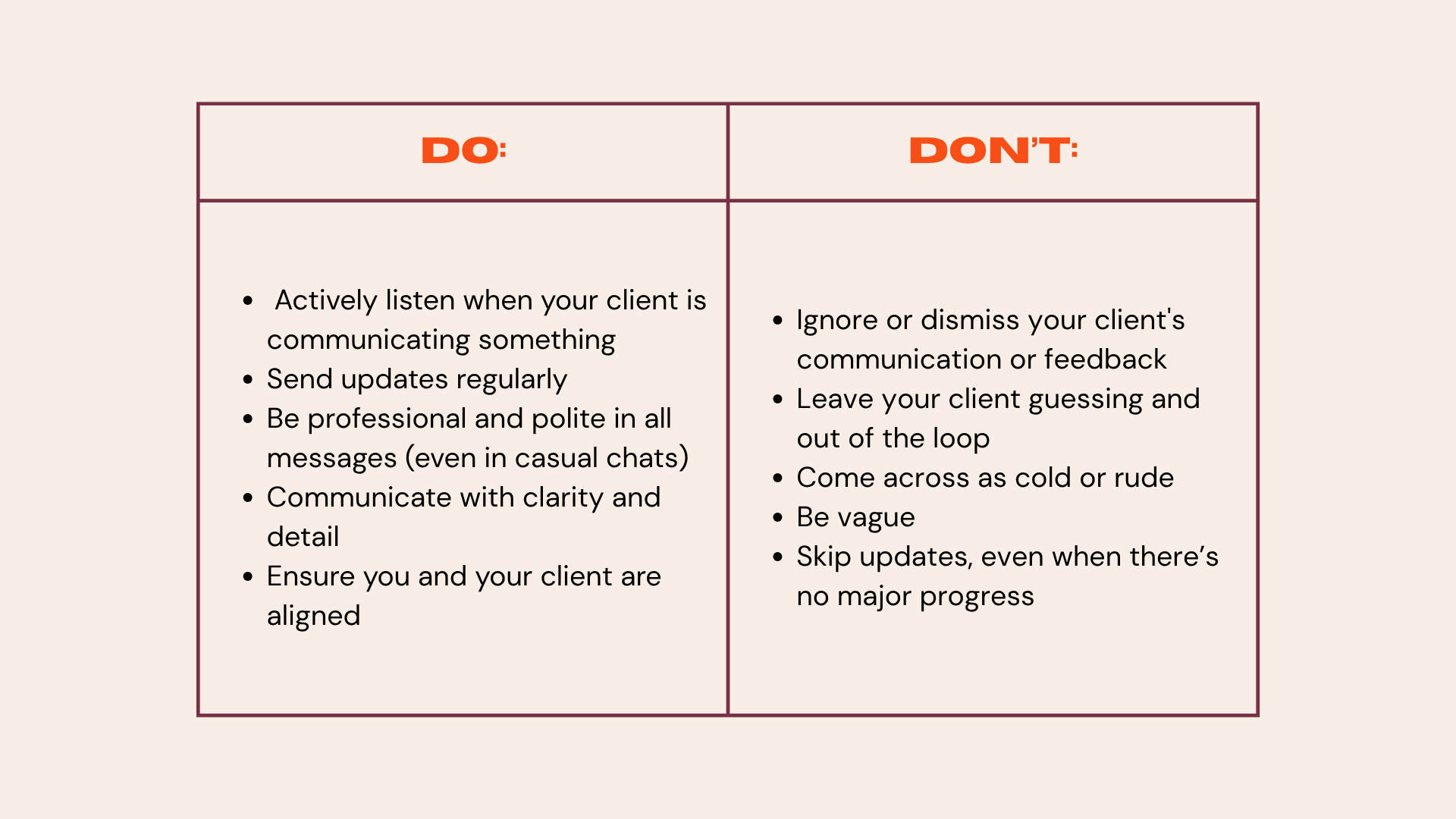
When working with clients, remember that part of being a great freelancer and collaborator is being someone who communicates confidently and consistently, not just someone who delivers great work.
Helpful Project Management Tools
You don’t need fancy software to stay organized and efficient. What you need are the right tools that you can integrate into your process that can make your workflow smoother and professional. Here is a curated list of must-try apps and platforms that can help you in your freelancing journey!
- Project Management
- Notion – This application is a powerhouse, known for being an all-in-one workspace for productivity. It is highly customizable and great for organizing client notes, project timelines, and personal to-dos in one place. You can check out and download the Notion app here.
- Trello – A visual board-based tool that utilizes a system of boards, lists, and cards. It can help you track progress through lists like To Do → In Progress → Done. You can check out and download the Trello app here.
- Asana – This app is a cloud-based work management platform, perfect for teams or long-term projects with multiple deliverables. The platform lets you assign tasks, set deadlines, and track progress easily. You can check out and download the Asana app here.
Tip: Color-code projects or stages so you can see your week at a glance!
Why these tools work: Using project management platforms doesn’t just make your life easier–it helps your clients see your professionalism. Organized freelancers build trust and tend to get rehired faster.
- Time Management & Productivity
- Google Calendar – Use it to block off hours for project work, meetings, and school tasks. Set reminders so you never miss deadlines.
- Toggl Track – This app helps track how long you spend on each task. This is useful when calculating your rates or identifying where most of your time goes. You can check out and download the Toggl Track app here.
- Microsoft Outlook Calendar – Another great alternative if you’re more accustomed to using Microsoft tools.
Tip: Treat your freelance work like class schedules, block off hours so you can focus better.
- File Sharing & Storage
- Google Suite (Drive, Docs, Sheets, Slides) – This platform is highly accessible and is a freelancer’s essential! You can use Google Drive for file storage, Docs for proposals and contracts, and Sheets for budgets or timelines. Everything also syncs automatically, making working from anywhere much easier.
- Microsoft Office 365 (Word, Excel, PowerPoint) – This system is also very accessible and is perfect if you’re more comfortable with traditional software. It’s reliable, professional, and compatible with most clients’ systems.
- We Transfer / Dropbox – Both applications are great options for large or high-quality files like photos, videos, or design assets.
Tip: Always organize your files with clear naming conventions (e.g., ClientName_ProjectPhase_Date), it saves you from confusion later.
- Communication & Feedback
- Slack – A game-changer in terms of communication and collaboration. This platform allows teams to work together in one place through centralized messaging. It’s more organized than group chats, allowing you to separate topics into channels (like #feedback, #assets, #deadlines). There are options to integrate Asana or Trello as well, so updates appear right in your chat. You can check out and download the Slack app here.
- Zoom / Google Meet – Both applications are highly accessible and are useful for calls, meetings, check-ins, and presentations.
- Viber / Telegram – These applications are great for quick client updates or urgent communication, especially for local or small-business clients who prefer easy to use messaging apps.
- Loom – Mainly a video messaging and screen recording app, this can make video walkthroughs of your work easier, allowing you to explain drafts, strategies, or revisions clearly. You can check out and download the Loom app here.
Why communication tools matter: Freelancing means working remotely most of the time, these tools can help you collaborate efficiently, build rapport with clients, and ensure nothing gets lost in translation.
Tip: Keep your messages short and purposeful, and use threads to reply so conversations stay neat.
- Finance & Invoicing
- GCash/PayPal/Maya – Aside from bank transfers, these applications are popular payment platforms, making it easy for clients to send payments internationally or locally.
- Canva Invoice Templates / PayPal Invoicing – Both offer free options to create clean, branded invoices easily.
Tip: Send your invoice together with your final deliverables or based on your payment schedule as outlined in your contract.
Activities
Activity 1: Draft a Freelance Project Contract
Drafting contracts can be filed under the list of boring tasks of freelancing, but it’s undoubtedly one of the most important ones. In this activity, it’s time to put on your freelance and business mode by drafting your freelance project contract.
Instructions:
Create a simple contract for a mock client (think of a dream client or passion project you’ve been wanting to work on!). The contract should include:
- Scope of work
- Timeline or estimated deadlines
- Rates and Payment Terms
- Revisions
- Optional: Usage and ownership rights
Access a template sample below to help you get started.
Remember to personalize the content to fit your needs and services!
Activity 2: Build a Project Timeline
“By failing to prepare, you are preparing to fail.” – Richard Whately
Every successful project stems from a well-thought-out plan. This activity will help you practice how to structure your workflow and test your time management skills.
Instructions:
Map out a project timeline based on a hypothetical or real project. Using a Gantt chart, identify the project’s “phases” or milestones, identify key tasks, and assign deadlines. Once done, review your chart with a friend or mentor and identify areas for better pacing or distribution. Access the Gantt Chart Template below