
Module 3, Lesson 3
Guiding Lights: Finding A Mentor
While we must learn from our own individual experiences in the industry, it’s also beneficial to learn from those who have already gone through the motions. The last lesson of this module will focus on the generous individuals who shape other practitioners by sharing their wisdom and guidance: our mentors.
objectives
- Learning the importance of mentorship in personal and career growth
- Identifying the qualities of a good mentor
- How to seek, build, and maintain a relationship with a mentor
Mentorship as a career boost
Mentorship refers to a two-way relationship in which an experienced individual passes their knowledge, experience, and professional connections to guide a less experienced individual (Indeed, 2025). In the CMP industry, wherein it’s “every man for himself,” mentors can serve as our stepping stones towards a successful career.
- Skill Training: On the most basic level, mentors can provide direct support towards our technical and hard skills. With their myriad of experience and skill, it’s great to turn to them for constructive criticism. For example, they can give comments on our writing styles or the composition of our images.
- Emotional and Social Development: A mentor will be there to celebrate your wins and help you up from your losses, which helps build character. Working so closely with a professional can also teach us about leadership, problem-solving, and communication skills.
- Expanded Network: The more that you show up and improve yourself, the more your mentor will remember your name in important conversations. Your mentorship can serve as your bridge towards a wider network of seasoned professionals.
“Entering the industry, when you have these lower roles, don’t look at them as dirty. Think of them as opportunities to learn. Being able to observe my mentors, my directors, my bosses, at that early stage of my career, I wouldn’t dare to complain, even if it’s free from charge. Because there’s a reason why they’re on top.” – Luis Danao
Types of mentorship
Of course, as creatives, we all have different needs when looking for guidance. Some of us may need a mentor with decades of experience, while some may need a fresh mind who is more knowledgeable in the newest technologies. So let’s take a look at the different types of mentorship and the advantages of each one.
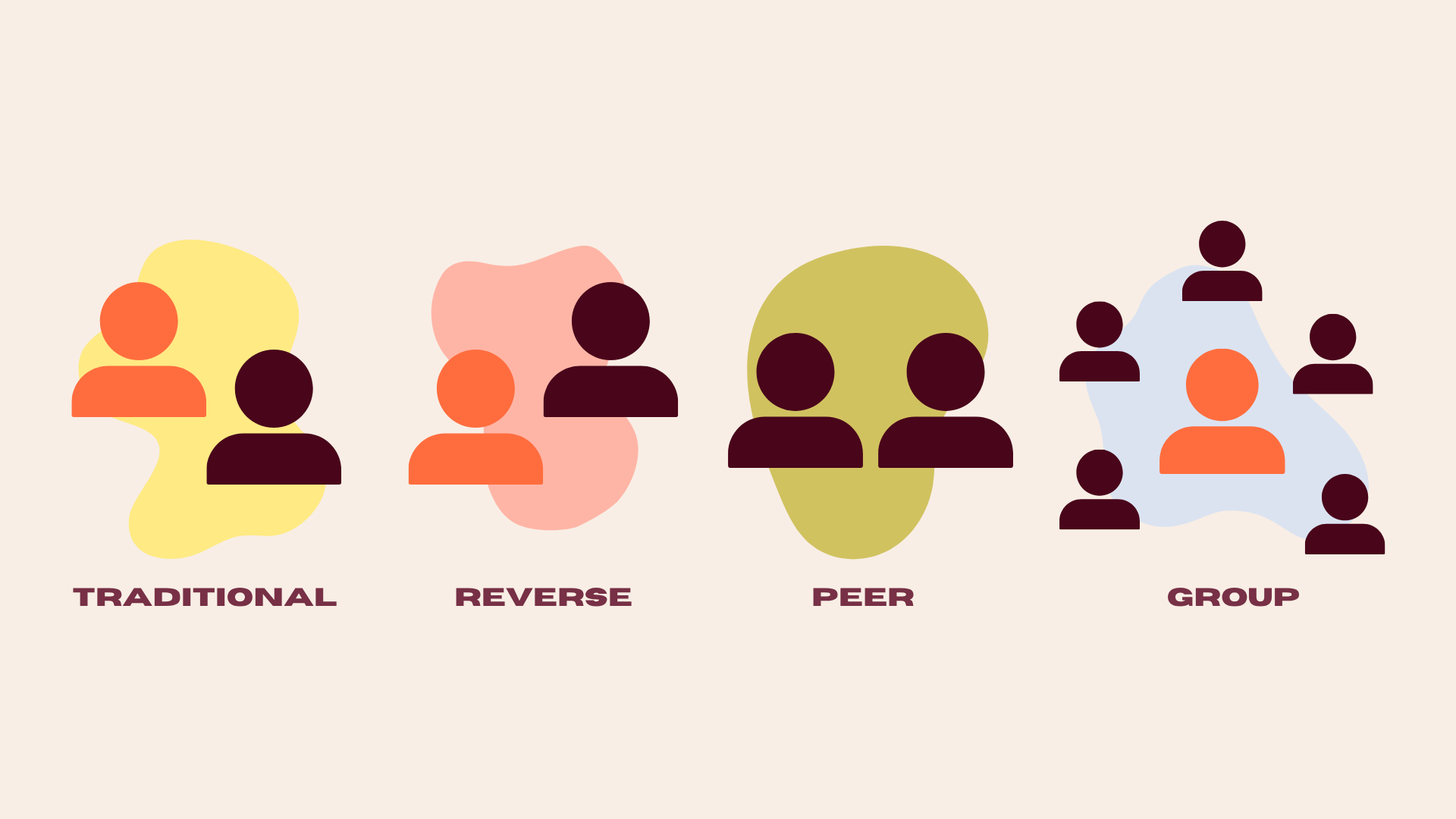
- Traditional mentorship: The senior mentors the junior. This is good for those who want to learn from the specific experiences and wisdom of a seasoned professional in their desired field.
- Reverse mentorship: The junior mentors the senior. This type usually applies for transferring new skills and teaching new technologies. It is beneficial for providing the senior mentee with fresher perspectives, thus bridging generational gaps and promoting inclusivity (Source).
- Peer mentorship: Both individuals are at similar career stages. This type emphasizes a collaborative partnership where both exchange their own unique knowledge, experiences, and learnings with one another.
- Group mentorship: One mentor for a group of mentees. This type, while less personal to each mentee, can enhance development through shared experiences, accountability within a group, and opportunities for expanded networking (Source).
In evaluating what kind of mentorship you need, make sure to understand your personal needs as a mentee. It is a privilege to have a mentor, so make sure you select a great one for you!
What makes a good mentor?
To find a mentor that best suits you, you must know what exactly you need from them. Below are a few prompts that you can reflect on as you evaluate your mentor options.
- Do they work in the field that you want to work in?
- What achievements or accomplishments do they have that qualify them to mentor you?
- Have you seen them work behind the scenes? Have you seen them handle a challenge?
- Have you observed their leadership and/or mentoring style? Would they be able to mentor you in a style that you’re comfortable in?
- Would they be able to commit enough time and energy into mentoring you?
- Are they capable of giving unique, constructive criticism that other mentors would not be able to give?
But remember, in the end, a mentor is merely a guide in your journey as a CMP practitioner. They can only support you from behind the curtains, and the rest of it is all on you. Go make them proud!
Activities
Activity 1: Mentor Search Exercise
In this industry, mentors do not come easily. It takes time to find a mentor who we truly trust as we navigate the early stages of our careers. This activity will guide you as you find yourself a good mentor.
- Write or type down the non-negotiable qualities that you would need from a mentor. You can refer to the “what makes a good mentor?” prompts in the lesson above.
- From there, identify potential mentors in your desired field. These can be people you know or professionals that you look up to. Don’t be afraid to dream big.
- Draft an email to reach out.
- Make sure to introduce yourself and explain why your journey aligns with them as a mentor.
- Once you are done with the email draft, consider hitting send! You have nothing to lose when you put yourself out there.
“You have to be bold. You have to approach the person and tell the person WHY [you want them to be your mentor]. Sincerity is very important.” – Noel Galvez
Activity 2: Reflection Journal
For this activity, bring out a notebook or journal. Think of anyone who has guided or inspired you to become a creative media practitioner. Write down the following:
- Everything this person has taught you about yourself, your career, and your goals.
- The qualities and traits that you admire in them.
- Any notable stories that they have shared about their journeys.
In your free time, try doing this for more people who have inspired you over the years. Notice similar characteristics between the people that inspire you and try to build those within yourself.